May
Knowledge of Weapons, Weapons How
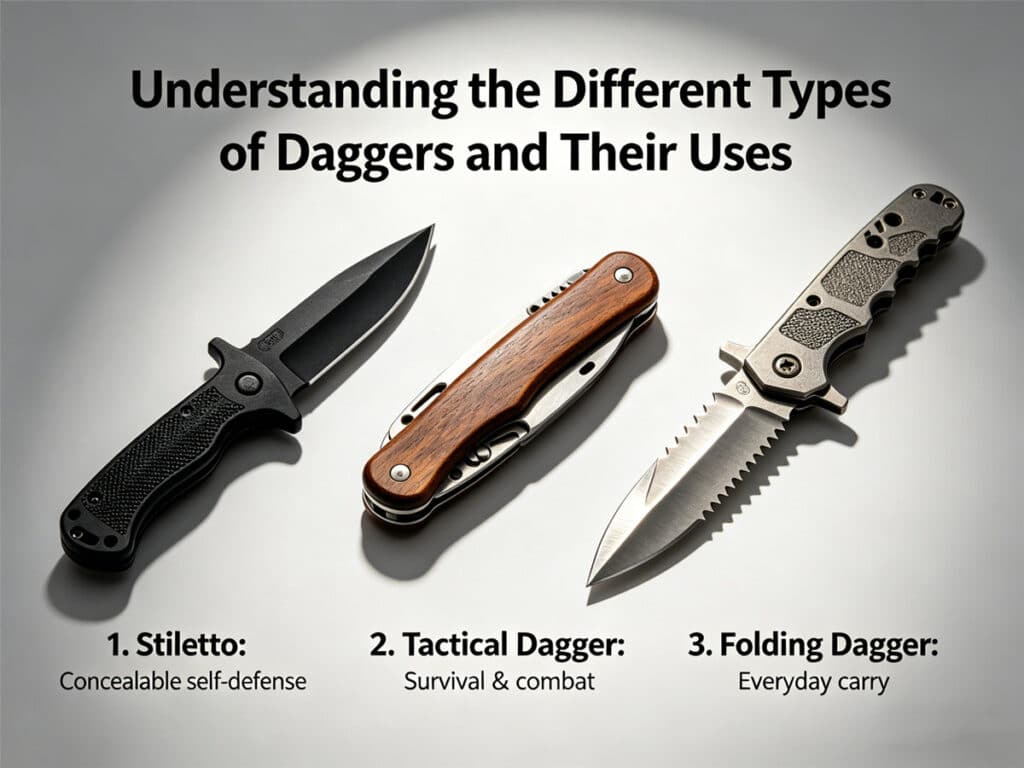
Understanding the Different Types of Daggers and Their Uses
A Historical Perspective on Daggers and Their Evolution
Throughout history, the dagger has occupied a unique place among edged tools and weapons, valued not only for its compact form but also for its versatility across different cultures and time periods. Unlike longer blades designed primarily for reach or battlefield dominance, daggers were often carried as secondary tools, serving purposes that ranged from utility tasks to ceremonial roles, depending on the region and historical context.
In ancient civilizations, daggers were frequently associated with both daily life and symbolic meaning, as they could be used for practical cutting tasks while also representing status or authority. Over time, their designs evolved in response to changing needs, materials, and craftsmanship techniques, leading to a wide variety of forms that reflect the ingenuity of their makers. From simple, utilitarian blades to intricately decorated pieces, the dagger’s development illustrates how function and artistry can coexist within a single object.
As societies advanced, daggers continued to adapt, with different regions developing distinct styles that catered to local requirements, whether for hunting, self-defense within legal contexts, or ceremonial display. This diversity of design has contributed to ongoing interest among collectors, historians, and enthusiasts who study how these tools have been shaped by cultural and technological influences.
Classification of Daggers by Design and Structure
Double-Edged Daggers
One of the most recognizable forms of the dagger is the double-edged design, characterized by a blade that is sharpened on both sides and tapers to a central point. This structure allows for symmetrical balance and precision, making it suitable for tasks that require controlled penetration and clean cutting motions.
Double-edged daggers are often associated with historical military use, but they also appear in ceremonial contexts, where their balanced design and refined appearance make them visually striking. Their construction requires careful attention to symmetry and edge alignment, which highlights the craftsmanship involved in producing high-quality examples.
Single-Edged Daggers
In contrast, single-edged daggers feature a blade sharpened on only one side, often with a thicker spine that provides additional strength and durability. This design is typically more robust and can be better suited for utility tasks that involve slicing or cutting through tougher materials.
The single-edged form reflects a more practical approach, emphasizing functionality over symmetry, and is often favored in designs intended for everyday use within appropriate legal and practical boundaries. Its versatility has made it a common choice in regions where tools must serve multiple purposes.
Push Daggers
Push daggers are a distinctive category, designed with a handle that sits perpendicular to the blade, allowing the user to apply force in a direct forward motion. This unique configuration changes how the tool is held and used, offering a different ergonomic experience compared to traditional dagger designs.
While push daggers are often associated with specific historical contexts, modern interpretations are frequently explored for their design characteristics and ergonomic considerations, particularly in discussions about how form influences handling and control.
Specialized and Cultural Variants
Beyond these primary categories, there are numerous specialized dagger types that reflect cultural traditions and specific uses, ranging from ceremonial pieces to tools designed for particular tasks. These variations often incorporate unique blade shapes, handle designs, and decorative elements that distinguish them from more common forms.
Studying these specialized designs provides insight into how different societies have approached the balance between functionality and symbolism, creating objects that serve both practical and cultural purposes.
Understanding the Practical Uses of Daggers
Utility and Everyday Applications
Although the dagger is often associated with combat in historical narratives, many designs have practical applications that extend into everyday tasks, particularly in contexts where a compact and precise cutting tool is required. These uses can include preparing materials, cutting rope, or performing detailed work that benefits from a sharp, pointed blade.
In such cases, the dagger’s size and shape make it a convenient option for tasks that require control and accuracy, highlighting its versatility beyond its more commonly perceived roles.
Ceremonial and Decorative Roles
Daggers have long held symbolic significance in various cultures, where they are used in ceremonies, rituals, or as decorative items that reflect heritage and craftsmanship. These pieces are often elaborately designed, featuring intricate engravings, precious materials, and artistic detailing that elevate them beyond purely functional tools.
The ceremonial use of daggers underscores their cultural importance, as they can represent values such as honor, tradition, or status, depending on the context in which they are presented.
Collecting and Historical Interest
For many enthusiasts, daggers are valued as collectible items that offer a tangible connection to history and craftsmanship. Collectors often focus on factors such as design authenticity, material quality, and historical significance, seeking pieces that tell a story or represent a particular era or style.
This interest in collecting has contributed to a deeper appreciation of dagger design, encouraging ongoing research and preservation efforts that help maintain knowledge of these tools and their origins.
Modern Perspectives and Responsible Ownership
In contemporary contexts, the dagger is often viewed through a lens that emphasizes responsible ownership, legal compliance, and appreciation for design rather than practical use in sensitive situations. Laws governing daggers can vary widely depending on location, making it essential for individuals to understand and follow local regulations before acquiring or carrying such items.
Modern discussions around daggers frequently focus on their craftsmanship, historical significance, and role as collectible or decorative objects, rather than their traditional uses. This shift reflects a broader trend toward appreciating these items as part of cultural and design heritage, rather than purely functional tools.
At the same time, many individuals explore alternative everyday carry items that offer practicality while remaining within legal and social boundaries, such as keychain tools and tactical pen designs, which combine utility with portability in a more widely accepted format. For those interested in exploring different tools, designs, and craftsmanship approaches, platforms like brassknucklesmaster.com provide additional insights into how traditional concepts can evolve into modern, responsible applications.