
Feb
Knowledge of Weapons, Weapons How
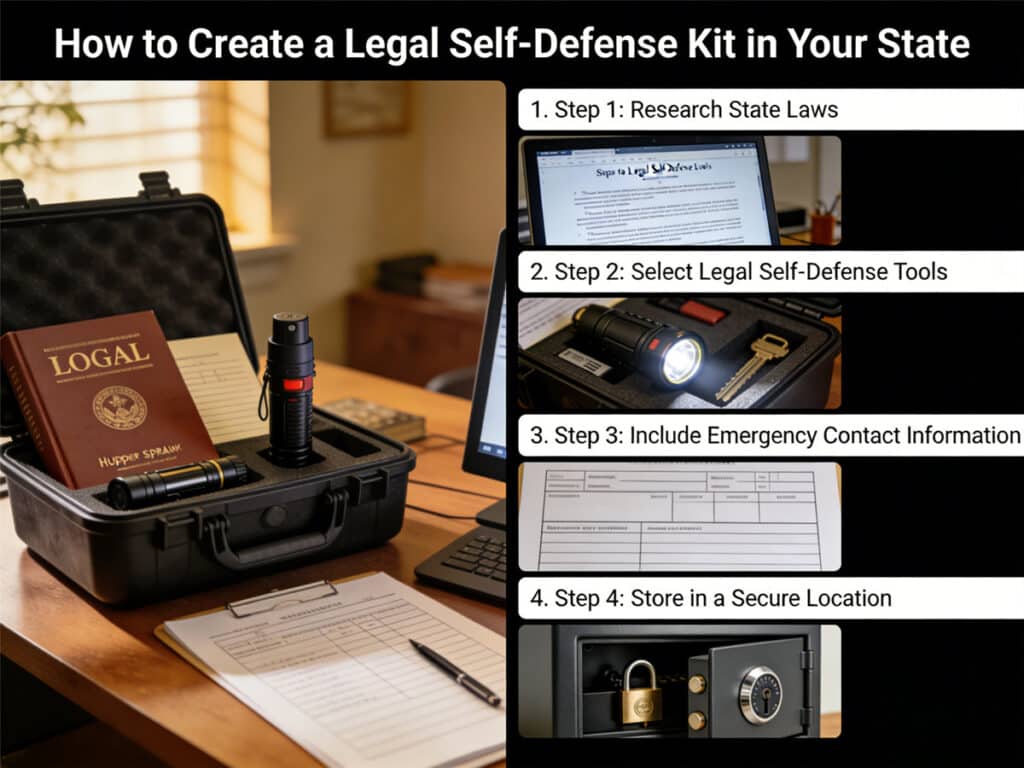
How to Create a Legal Self-Defense Kit in Your State
Building a self-defense kit is not about fear or preparing for extreme scenarios. For most people, it is about responsibility, awareness, and making thoughtful choices that align with the law while supporting personal safety in everyday life. The challenge is that self-defense laws vary widely by state, and what is perfectly acceptable in one place may be restricted or regulated in another. Creating a legal self-defense kit requires patience, research, and a clear understanding of both your environment and your personal needs.
This guide walks through the process step by step, focusing on legality, practicality, and balance, so that your kit supports peace of mind rather than creating unnecessary legal risk.
Understanding the Legal Landscape in Your State
The foundation of any legal self-defense kit is knowledge. Laws governing self-defense tools are shaped by state statutes, local ordinances, and sometimes even city-level regulations. These laws define what items are permitted, which are restricted, and under what circumstances they may be carried or used.
Before purchasing anything, it is essential to understand how your state categorizes self-defense tools. Some states differentiate between concealed and open carry, others focus on intent, and many include exceptions based on age, location, or profession.
State vs Local Regulations
Even when an item is legal at the state level, local jurisdictions may impose additional restrictions. Certain cities prohibit specific tools in public spaces, government buildings, or venues such as schools and events. A responsible approach means checking both state statutes and local codes rather than assuming one set of rules applies everywhere.
Intent and Context Matter
Many laws evaluate not just what you carry, but why and how you carry it. Items marketed for self-defense are often scrutinized more closely than everyday objects. Understanding how intent is interpreted helps you make smarter choices about what belongs in your kit.
Defining the Purpose of Your Self-Defense Kit
A legal self-defense kit should be built around realistic needs, not worst-case fantasies. Most people benefit from tools that emphasize awareness, deterrence, and escape rather than confrontation. Clarifying your purpose helps narrow down options and keeps your kit practical.
Consider where you spend most of your time, how you commute, and what environments you move through daily. Someone who walks frequently in urban areas may prioritize different tools than someone who drives long distances or travels often.
Everyday Carry vs Situational Preparedness
Some tools are designed for constant carry, while others make sense only in specific situations, such as keeping them in a vehicle or at home. Separating these categories reduces clutter and ensures that what you carry daily remains lightweight, discreet, and lawful.
Choosing Tools That Balance Legality and Practicality
The best self-defense tools are those that fit naturally into your routine and comply with local laws without drawing unnecessary attention. Practicality often matters more than power, especially when legality is a concern.
Every item in your kit should serve a clear purpose, whether it is improving awareness, providing a means of escape, or offering a layer of protection without escalating a situation.
Low-Profile and Dual-Use Items
Tools that serve more than one function are often easier to justify legally and socially. Items that blend into everyday life tend to attract less scrutiny while still offering practical benefits. This approach reduces the risk of legal misunderstandings and makes your kit more sustainable over time.
Non-Weapon Components That Enhance Safety
A well-rounded self-defense kit is not limited to physical tools. Many of the most effective components focus on prevention, communication, and preparedness rather than force.
Personal alarms, flashlights, and first-aid supplies are often overlooked, yet they play a significant role in reducing risk and improving outcomes during stressful situations. These items are widely legal and add meaningful value without legal complexity.
Awareness and Visibility Tools
High-quality flashlights can disorient temporarily without causing harm, while alarms draw attention and discourage unwanted behavior. These tools support escape and deterrence, aligning well with legal self-defense principles focused on avoidance and safety.
Responsible Storage and Carry Practices
Legality does not stop at ownership. How and where you carry your self-defense tools matters just as much. Improper storage or careless handling can turn a legal item into a legal problem.
Understanding carry restrictions, such as prohibited locations or concealment rules, is essential. Responsible storage also ensures that tools are accessible when needed but secure when not in use.
Transporting Your Kit Safely
When traveling between jurisdictions, laws can change quickly. Keeping certain items stored rather than carried, especially when crossing city or state lines, reduces risk. A modular kit allows you to adjust what you carry based on location and activity.
Staying Informed as Laws and Circumstances Change
Self-defense laws evolve, and staying informed is part of maintaining a legal kit. Legislative updates, court decisions, and policy changes can affect what is permitted. Periodic review of your kit ensures continued compliance.
Equally important is reassessing your personal situation. Changes in routine, work environment, or travel habits may call for adjustments to what you carry and how you carry it.
Education and Training
Legal tools are most effective when paired with knowledge. Understanding de-escalation techniques, situational awareness, and local self-defense laws strengthens your ability to act responsibly and confidently if faced with a difficult situation.
Building Confidence Through Thoughtful Preparation
Creating a legal self-defense kit is ultimately about confidence rooted in responsibility rather than fear. When your choices are informed by law, practicality, and self-awareness, your kit becomes a quiet support rather than a source of stress.
People choose different tools based on comfort level and local regulations. Some prefer discreet, multifunctional items like a tactical pen, while others explore more traditional options such as a brass knuckle where legally permitted. What matters most is that every item in your kit reflects a clear understanding of the law, a respect for personal safety, and a commitment to using preparedness as a means of moving through everyday life with calm and confidence.