
Jun
Knowledge of Weapons
Heavy-Duty Brass Knuckles: Engineered for Maximum Impact Resistance
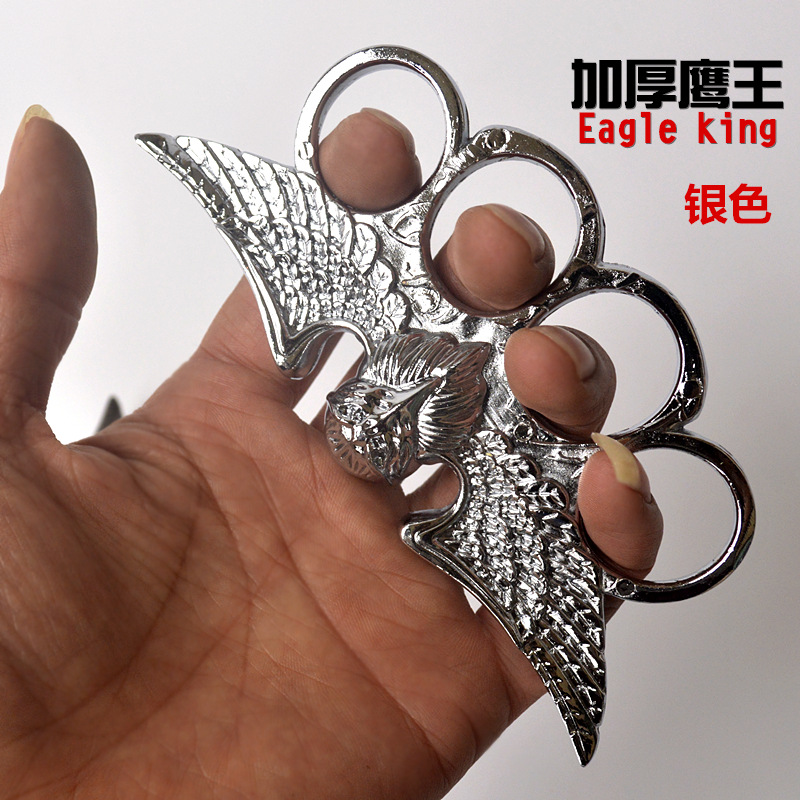
Brass knuckles, known variously as knuckle dusters, knucks, or knuckle knives when augmented with blades, occupy a unique and often controversial niche in the world of personal protection tools. Their fundamental design – a metal frame worn across the knuckles – concentrates the force of a punch through rigid contact points, significantly amplifying the potential for damage compared to a bare fist. While their legal status varies drastically across jurisdictions (a critical consideration explored later), there exists a subset of these implements engineered to an exceptional standard: heavy-duty brass knuckles. These are not novelty items or mere fashion accessories; they are purpose-built tools designed around a singular core principle: maximum impact resistance. This blog post delves into the engineering, materials science, and performance characteristics defining this specialized category.
The Imperative of Impact Resistance: Beyond Basic Durability
Why prioritize impact resistance above all else? The answer lies in the brutal physics of the application. Upon striking a hard target – whether intentional or accidental – immense shock forces travel instantaneously back through the knuckle device. A poorly constructed piece risks catastrophic failure: bending, cracking, or even shattering under this stress. This isn’t merely an inconvenience; it’s a critical safety hazard. Fragmentation can cause severe injury to the wielder’s hand, and structural deformation can trap fingers or transfer damaging vibrations into vulnerable joints and bones. Heavy-duty variants are conceived to withstand these extreme transient loads repeatedly without compromise. Impact resistance translates directly to user safety, structural integrity, and reliable performance under duress. It ensures the tool performs its intended function without becoming a liability. This necessitates a fundamental shift from simple casting to sophisticated engineering and material selection.
Metallurgy Matters: The Foundation of Strength
The choice of material is the bedrock upon which impact resistance is built. While traditional knuckles might use basic brass alloys or even inferior pot metals, heavy-duty versions demand metallurgical excellence:
- High-Grade Brass Alloys: Not all brass is created equal. Heavy-duty designs often utilize naval brass (C46400) or forging brass (C37700). These alloys incorporate carefully balanced proportions of copper and zinc, enhanced with small but critical additions of elements like tin, iron, manganese, or even lead (within safe limits). Tin significantly improves corrosion resistance and strength, while manganese enhances hardness and wear resistance. Iron contributes to grain refinement, making the metal tougher and less prone to cracking. These alloys boast superior tensile strength and, crucially, impact toughness compared to standard brass.
- Advanced Composites & Treatments: Pushing the envelope further, some premium heavy-duty knuckles may incorporate powder metallurgy techniques for near-net-shape production with exceptional density and consistency, or undergo specialized heat treatment processes. Controlled heating and quenching cycles can optimize the microstructure of the brass, refining grain boundaries and enhancing hardness precisely where needed (like the striking surfaces) while maintaining sufficient ductility in the frame to absorb shock without brittle fracture. Surface hardening techniques might also be employed to create an extremely wear-resistant exterior layer. Precision machining from solid billet, rather than casting, is another hallmark, eliminating porosity and ensuring optimal grain flow for maximum strength.
Engineering for the Shockwave: Geometry and Mass Distribution
Material alone is insufficient. Sophisticated mechanical engineering principles are applied to the geometry and mass distribution of heavy-duty brass knuckles to maximize their ability to absorb, dissipate, and deliver kinetic energy effectively:
- Strategic Reinforcement: Critical stress points, particularly around the finger holes and junctions where the transverse bar meets the knuckle plates, are significantly thickened. This structural reinforcement prevents deformation at these high-stress zones under heavy impact. The cross-section profiles are often tapered or contoured not just for ergonomics but to direct stress flow away from potential failure points towards areas designed to handle it.
- Optimized Mass & Balance: While increased mass inherently contributes to greater striking force (Force = Mass x Acceleration), indiscriminate bulk is counterproductive. Heavy-duty designs carefully calibrate mass distribution. Concentrating slightly more mass directly behind the primary knuckle strike points enhances rotational inertia during the punch, increasing the delivered kinetic energy. Simultaneously, the overall weight must remain manageable to ensure striking speed and user control aren’t sacrificed. The balance point is meticulously calculated to feel like a natural extension of the fist.
- Ergonomic Integration: True impact resistance requires minimizing energy loss and instability within the wielder’s hand. Anatomical contouring ensures the knuckles fit securely and comfortably against the hand’s natural shape. This maximizes force transfer from the skeletal structure directly through the knuckle device to the target, minimizing energy dissipation through slippage or improper alignment. Deep, well-sized finger holes provide a secure grip, crucial for maintaining control and preventing the device from shifting or rotating violently upon impact, which could cause hand injury or reduce striking efficiency. Non-slip textures or coatings are often applied to critical grip areas.
Validating Performance: Testing Beyond Theory
Claims of heavy-duty performance and maximum impact resistance must be substantiated. Reputable manufacturers subject their designs to rigorous testing protocols that simulate real-world abuse far exceeding typical use:
- Destructive Impact Testing: Prototypes and production samples undergo controlled impact testing. This involves mounting the knuckles and subjecting them to repeated, calibrated impacts from a swinging pendulum or drop tower directly onto the critical strike points. The objective is to determine the ultimate failure point – the energy level at which the material cracks or deforms permanently. Heavy-duty units are designed to withstand impacts significantly exceeding the forces achievable by even a powerful human strike without failure.
- Cyclic Fatigue Testing: Beyond single catastrophic impacts, fatigue life is critical. Testing machines apply thousands of repetitive, sub-failure level impacts to the knuckles. This assesses their ability to endure prolonged use and stress cycling without developing microfractures or undergoing stress relaxation that could lead to sudden, unexpected failure later. Premium units exhibit exceptional fatigue resistance.
- Environmental Stress Testing: Performance isn’t just about immediate impact. Units may be subjected to temperature extremes (freezing cold to simulate winter use, high heat) and corrosion testing (like salt spray chambers) to ensure the material properties and structural integrity remain uncompromised in harsh conditions. Abrasion resistance of critical surfaces might also be evaluated. This comprehensive quality assurance regimen ensures the knuckles deliver consistent performance and long-term reliability under demanding circumstances.
The Tactical Rationale and Legal Imperative
Understanding the context for such robust engineering is essential. The niche for heavy-duty brass knuckles typically exists within specific tactical, security, or extreme preparedness communities where individuals anticipate scenarios involving potentially violent encounters with determined threats. For these users, the tool represents a last-resort option when avoidance and de-escalation have failed, and other tools (like OC spray) are unavailable or ineffective. The requirement for maximum impact resistance stems from the critical need for absolute reliability in these high-stakes situations. A failure mid-use could be catastrophic. The psychological deterrent factor of such a visibly robust implement can also play a role, though effectiveness varies. However, this discussion is inseparable from the overwhelmingly complex legal landscape. Brass knuckles are classified as prohibited weapons, illegal weapons, or deadly weapons in the vast majority of countries, states, and municipalities. Possession, carry, or use, regardless of intent or the device’s quality, can result in severe criminal charges, including felonies, carrying substantial fines and imprisonment. Responsible discourse must emphasize that engineering excellence does not supersede or negate local laws. Thorough research and strict adherence to the specific ordinances governing your location are paramount and non-negotiable. Ownership, where even marginally conceivable, demands an acute awareness of legal liability and profound ethical responsibility.
The Pursuit of Peak Performance
Heavy-duty brass knuckles represent the pinnacle of engineering applied to a specific and ancient form factor. They are the product of advanced metallurgical science, precise mechanical engineering, and exhaustive performance validation. Every aspect, from the specific crystalline structure of the alloy to the millimeter-perfect thickness of a reinforced stress point, is optimized for one core function: to absorb and deliver devastating kinetic energy without failing. This pursuit of maximum impact resistance is fundamentally about predictable performance, structural integrity, and user safety under the most extreme conditions imaginable. While their existence pushes the boundaries of material and design capability within this specific category, it is crucial to reiterate that their legal status is extremely restrictive almost everywhere. Appreciating the engineering feat should always be accompanied by a sober understanding of the profound legal restrictions and ethical considerations surrounding these tools. The engineering serves a singular, demanding purpose, but its application exists within a tightly constrained, and often entirely prohibited, real-world context. Respecting these boundaries is inseparable from understanding the object itself.