
Sep
Knowledge of Weapons, Whether Weapons Are Illegal
Can Civilians Legally Own an Expandable Baton for Self-Defense?
The Complex Legal Framework Governing Expandable Batons
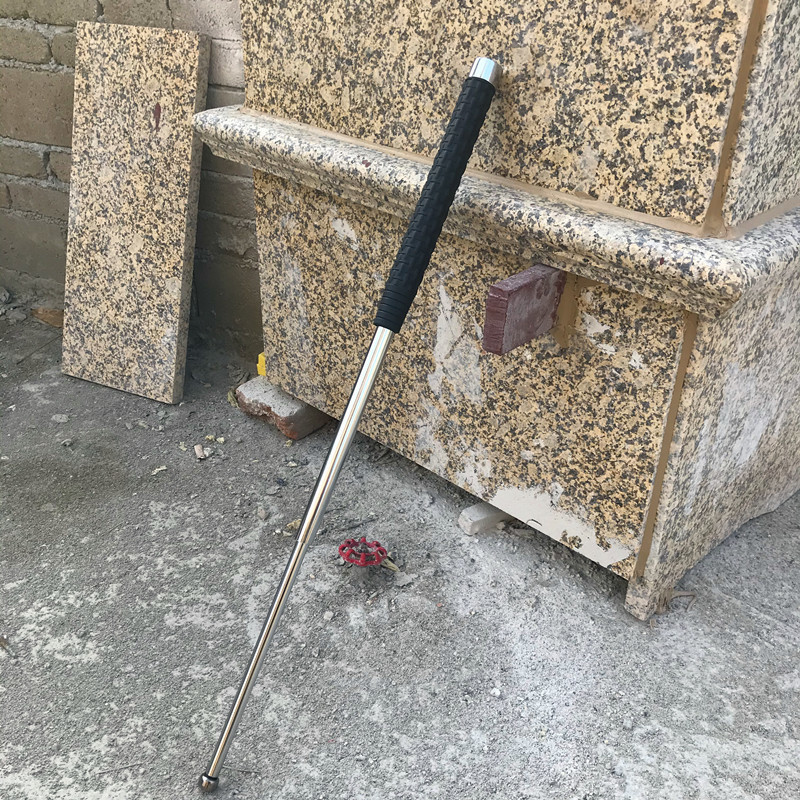
Expandable batons—also termed telescopic, collapsible, or tactical batons—occupy a nebulous position in U.S. self-defense law. Unlike firearms, which face clear federal regulations, baton legality hinges on a three-tiered patchwork of federal, state, and local statutes.
Federal Oversight: Minimal but Critical
No federal law expressly bans civilian expandable baton ownership. However, two key restrictions apply:
- The Switchblade Knife Act (15 U.S.C. § 1241–1245) may apply to spring-loaded batons if deemed “automatically opening” weapons, though most courts exclude batons.
- Interstate commerce regulations prohibit shipping batons to jurisdictions where they are illegal (e.g., Massachusetts, New York City).
State-Level Divergence: From Bans to “Gray Zones”
State laws fracture into three categories:
- Prohibited States: California (PC 22210), Massachusetts (GL c. 140 § 131J), and New York (NY Penal Law § 265.01) ban civilian possession entirely, classifying batons as deadly weapons or per se illegal instruments.
- Restricted States: Florida (FS 790.001) and Texas (PC 46.05) permit ownership but regulate carry methods (e.g., concealed vs. open).
- Unregulated States: Arizona (ARS 13-3101) and New Hampshire (RSA 159:12) impose no specific bans, deferring to general self-defense doctrines.
Municipal Ordinances and Preemption Conflicts
Even in permissive states, local ordinances often override state laws. For example:
- Chicago Municipal Code 8-24-020 prohibits baton possession citywide, despite Illinois state law allowing ownership.
- Preemption doctrines vary: In Ohio (ORC 9.68), state law voids local restrictions, whereas in Colorado, cities like Denver enforce their own bans.
Practical Implication: A baton legal in rural Texas may incur felony charges if carried in Austin under local code § 9-4-11.
Legal Carry Parameters and Use-of-Force Thresholds
Owning a baton is only half the battle; lawful carry and deployment require navigating strict use-of-force protocols.
Permitted Carry Methods
| State Type | Open Carry | Concealed Carry | Vehicle Carry |
|---|---|---|---|
| Prohibited (e.g., CA) | Illegal | Illegal | Illegal |
| Restricted (e.g., FL) | Allowed | Requires permit | Locked container |
| Unregulated (e.g., AZ) | No restrictions | No restrictions | No restrictions |
Justifiable Deployment Criteria
Baton use must satisfy proportionality standards:
- Imminent Threat Doctrine: Force must counter an immediate, credible threat (e.g., an attacker with a knife).
- Ability-Opportunity-Jeopardy (AOJ) Test: Users must prove the assailant had:
- Ability (physical means to harm),
- Opportunity (proximity to execute harm),
- Jeopardy (demonstrated intent).
Using a baton against verbal harassment or after a threat subsides risks aggravated assault charges.
Compliance Strategies for Civilian Owners
For owners in permissible jurisdictions, these protocols mitigate legal exposure:
Documentation and Training
- Certified Training: Complete courses from entities like ASP (Armament Systems and Procedures) or NRA Personal Protection.
- Legal Carry Permits: In states like Pennsylvania (Title 18 § 908), batons fall under “other lethal weapons” requiring a License to Carry Firearms (LTCF).
Baton Configuration Legality
- Material Restrictions: Polymer batons face fewer regulations than steel variants in cities like Washington D.C. (§ 22-4514).
- Length Limits: Batons exceeding 26″ (e.g., extended) may classify as “clubs” under statutes like NJ 2C:39-1.
Legal Repercussions of Improper Possession or Use
Violating baton laws triggers severe penalties:
- Criminal Charges:
- Misdemeanors: Unpermitted carry (e.g., ORS 166.240 in Oregon).
- Felonies: Possession in banned states (e.g., CA PC 22210: up to 3 years incarceration).
- Civil Liability: Victims may sue for excessive force under tort law, even if criminal charges are dismissed.
- Enhanced Sentencing: Using a baton during another crime (e.g., robbery) invokes deadly weapon enhancements (e.g., +5 years under USSG § 2B3.1).
Critical Precedent: People v. Richardson (CA Ct. App. 2023) upheld felony convictions for baton possession without “lawful occupation” exemption (e.g., security work).
Navigating the Future: 2025 Legislative Trends
Recent developments signal shifting landscapes:
- State Reforms: Michigan (HB 4432, 2024) now exempts batons from “dangerous weapon” classification if used defensively.
- Federal Scrutiny: The proposed National Self-Defense Device Standardization Act (2025) aims to override local bans but faces opposition from states-rights advocates.
Final Considerations: Consult a criminal defense attorney before purchasing or carrying. Store batons in locked containers during transport, and document training credentials rigorously. In borderline jurisdictions, consider non-lethal alternatives like pepper spray or tactical flashlights.
Disclaimer: This article does not constitute legal advice. Jurisdictional laws change frequently; verify current statutes with local authorities. KnucklesWarriors.com does not ship batons to prohibited regions.