
Dec
Knowledge of Weapons
Best Rescue Knives for New Car Owners
As a new car owner, the excitement of the open road comes with a sobering responsibility: preparedness for the unexpected. Beyond routine maintenance and safe driving habits, equipping your vehicle with the right tools can mean the difference between a minor inconvenience and a life-threatening situation. Among the most critical yet often overlooked additions to your vehicle emergency kit is a dedicated rescue knife. Far more than just a cutting tool, a purpose-built rescue knife integrates specialized features designed to swiftly address common automotive emergencies, such as escaping a jammed seatbelt or breaking a window after a submersion or collision. This guide explores the vital role of these tools, key features to prioritize, and reviews top options to empower you with confidence and safety on every journey.
Why Every New Car Owner Needs a Dedicated Rescue Knife
The primary function of a rescue knife in an automotive context is rapid egress from a compromised vehicle. Standard pocket knives or multi-tools lack the specific design elements crucial for these high-stress scenarios. A dedicated rescue knife provides:
- Swift Seatbelt Severance: Blunt-nosed blades with specialized hooked cutters slice through tough nylon webbing instantly and safely, even under tension, without risking injury to trapped occupants – a task where standard knife points can easily slip and cause harm.
- Effective Window Breaching: Integrated tungsten carbide or spring-loaded glass breakers deliver concentrated force to shatter laminated automotive side windows with minimal effort, a near-impossible feat with fists, elbows, or improvised tools.
- One-Handed Operation: Emergencies often involve limited mobility; rescue knives feature designs enabling deployment and use with a single hand, even in confined spaces or awkward positions.
- Reliability Under Duress: Constructed from robust materials and built for extreme conditions, these tools perform when needed most, unaffected by water, grime, or panic.
Critical Features Defining a Superior Automotive Rescue Tool
Not all knives marketed for rescue are created equal. New car owners should prioritize these non-negotiable features:
- Blade Type & Cutting Mechanism: A blunt-tip, non-serrated hooked blade is paramount for safe, effective seatbelt cutting. The hook grabs the webbing, and the blade slices cleanly without needing a sharp point that could injure. High-quality stainless steel ensures edge retention and corrosion resistance.
- Glass Breaker Effectiveness: Opt for a tungsten carbide tip or a robust, easy-to-activate spring-loaded punch. These concentrate immense force onto a tiny point, overcoming the strength of tempered glass. Avoid flimsy or poorly positioned breakers.
- Deployment & Ergonomics: Easy, one-handed opening (thumb studs, flippers, or automatic mechanisms where legal) is essential. A secure, non-slip grip – often with textured rubber or G10 scales – ensures control with wet, cold, or gloved hands. The handle should provide a positive, comfortable grip during forceful use.
- Durability & Construction: Stainless steel or high-strength polymer construction resists corrosion from road salt, moisture, and temperature extremes. Look for solid pivot mechanisms and overall robust build quality. A belt cutter should feel solid, not flimsy.
- Secure Mounting Options: The knife must be instantly accessible. Features like a strong pocket clip, lanyard hole, or dedicated vehicle mount (dash, visor, center console) are crucial. It should not become a projectile in a collision.
Anatomy of Rescue – Understanding Core Functions (Subtitles)
The true power of a rescue knife lies in its specialized components working in concert:
- The Seatbelt Cutter: This is typically a small, sharply ground hooked blade set perpendicular to the main handle, often near the base of the knife or on the spine. Its design allows the user to hook the seatbelt webbing and pull the knife towards themselves, cleanly slicing through the material with minimal risk of slipping and cutting the occupant. The blade is usually short, extremely sharp, and made of hardened steel to maintain its edge.
- The Glass Breaker: Found opposite the blade or integrated into the pommel (butt) of the handle, this is a hardened point designed to focus impact. Tungsten carbide tips are incredibly hard and scratch-resistant, making them ideal for punching through glass without blunting. Spring-loaded breakers utilize a mechanism where pressing the tip against the glass compresses a spring; releasing a button (or simply applying sufficient pressure) then drives the tip forward with significant force, reliably shattering the window.
- The Main Blade: While secondary to the rescue functions, a sharp, durable straight or partially serrated blade adds utility for general cutting tasks in emergencies – cutting debris, trimming frayed belts, or preparing first aid materials. A blunt tip enhances safety during rescue operations.
Top Rescue Knife Recommendations for New Drivers
Based on reliability, feature set, and value for new owners:
- Benchmade Rescue Hook (e.g., 7/8 H2O): Industry standard. Features Benchmade’s renowned AXIS lock for easy one-handed operation, a supremely effective Cobalt-60 alloy hook cutter, and a prominent tungsten carbide glass breaker. Excellent corrosion resistance (ideal for H2O model). Durable Grivory or stainless steel handles. Premium quality, premium price.
- Leatherman Raptor Rescue: Unique folding rescue shears design. Combines powerful oxygen tank wrench, ring cutter, carbide glass breaker, and a dedicated seatbelt cutter in a compact, foldable package. Offers incredible multi-functionality beyond just cutting. High-visibility colors available. Renowned Leatherman durability.
- CRKT M16-14ZLEK: Excellent value proposition. Features CRKT’s AutoLAWKS secondary safety lock for security. Includes a blunt-tip blade with a serrated section, a dedicated seatbelt cutter notch on the spine, and an effective glass breaker pommel. Rugged glass-filled nylon handle. Affordable and reliable.
- SOG Instinct: Minimalist and intuitive. Designed specifically for rapid deployment in emergencies. Features a blunt-tip blade optimized for safety, a large integrated seatbelt cutter hook, and a substantial glass breaker. Arc-Actuator lock is simple and strong. Lightweight yet durable construction.
- Gerber Gear Rescue Blades (e.g., Hinderer Rescue or EAB Lite): Gerber offers solid options. The Hinderer Rescue features a blunt tip, seatbelt notch, glass breaker, and a straight edge. The ultra-budget EAB Lite is a compact utility knife with a built-in seatbelt cutter and glass breaker, perfect for minimalists (replaceable blades). Good accessibility.
Strategic Placement – Where to Keep Your Rescue Knife Accessible
A rescue knife is useless if buried in the glove box during a crisis. Prioritize immediate accessibility:
- Driver’s Immediate Reach: Mount securely on the sun visor (using a dedicated clip/sheath), clipped inside the driver’s door pocket, or in a dedicated dashboard mount. Center console side pockets can also work if easily reachable without looking.
- Passenger Accessibility: Consider a second knife mounted on the passenger visor or within their door pocket. Passengers may need to assist the driver or escape independently.
- Avoid Hazardous Locations: Never store loosely on the seat, dashboard (unsecured), or anywhere it could become a dangerous projectile in a collision. Ensure the mounting method is robust.
- Visibility & Familiarity: Ensure everyone who regularly rides in the car knows where the knife is located and has a basic understanding of how to use the seatbelt cutter and glass breaker. Practice deployment (without activating the glass breaker unnecessarily).
Beyond the Blade – Training, Legality, and Responsible Ownership
Owning a rescue knife is only the first step. Responsible preparedness requires:
- Familiarization and Practice: Regularly handle your knife. Practice deploying it quickly and safely. Understand the mechanics of using the hook cutter (pulling motion) and the glass breaker (strike corners of windows, not the center). Use expired seatbelts and scrap auto glass (safely contained) for controlled practice. Muscle memory is critical under stress.
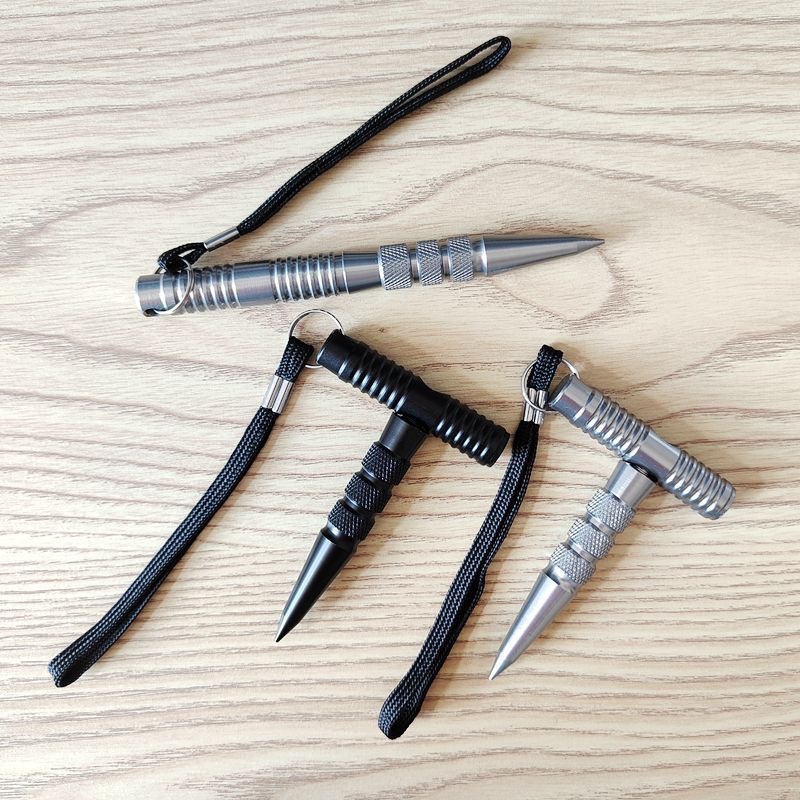
- Understanding Local Laws: Knife laws vary significantly by country, state, and municipality. Research local regulations concerning blade length, locking mechanisms (some areas ban automatics or certain locks), and carrying in vehicles. While rescue knives are primarily tools, ensure your chosen model and its carry method comply fully. Avoid any tool resembling brass knuckles, as these are illegal in most jurisdictions and offer no legitimate rescue utility. While a tactical pen might serve as a discreet writing tool and improvised impact device elsewhere, its effectiveness for vehicle rescue (cutting belts, breaking glass) is negligible compared to a dedicated rescue knife; prioritize the right tool for the specific job and ensure any item carried adheres strictly to local weapon laws.
- Complementing Your Emergency Kit: Your rescue knife is one vital component. Integrate it with a comprehensive vehicle emergency kit including a first-aid kit, jumper cables, flashlight, warning triangles, blanket, water, and basic tools. Regularly check and maintain all components.
- Prioritizing Avoidance & Safety: The best rescue is the one you never need. Defensive driving, proper vehicle maintenance, and avoiding hazardous conditions remain your primary safety strategies. The rescue knife is your last line of defense when prevention fails.
Empowering Your Journey with Confidence
Selecting the right rescue knife is an act of responsibility for yourself and your passengers. By focusing on essential features like a reliable blade type, an effective glass breaker, and one-handed operation, and choosing a reputable model designed for automotive emergencies, you add a powerful layer of security to your travels. Remember that strategic placement ensures accessibility, while familiarization and adherence to local laws ensure its effective and responsible use. As a new car owner, integrating this critical tool into your preparedness mindset allows you to embrace the freedom of the road, knowing you’re equipped to handle the unforeseen, transforming potential peril into manageable challenge. Drive safely, be prepared.