
Oct
Knowledge of Weapons
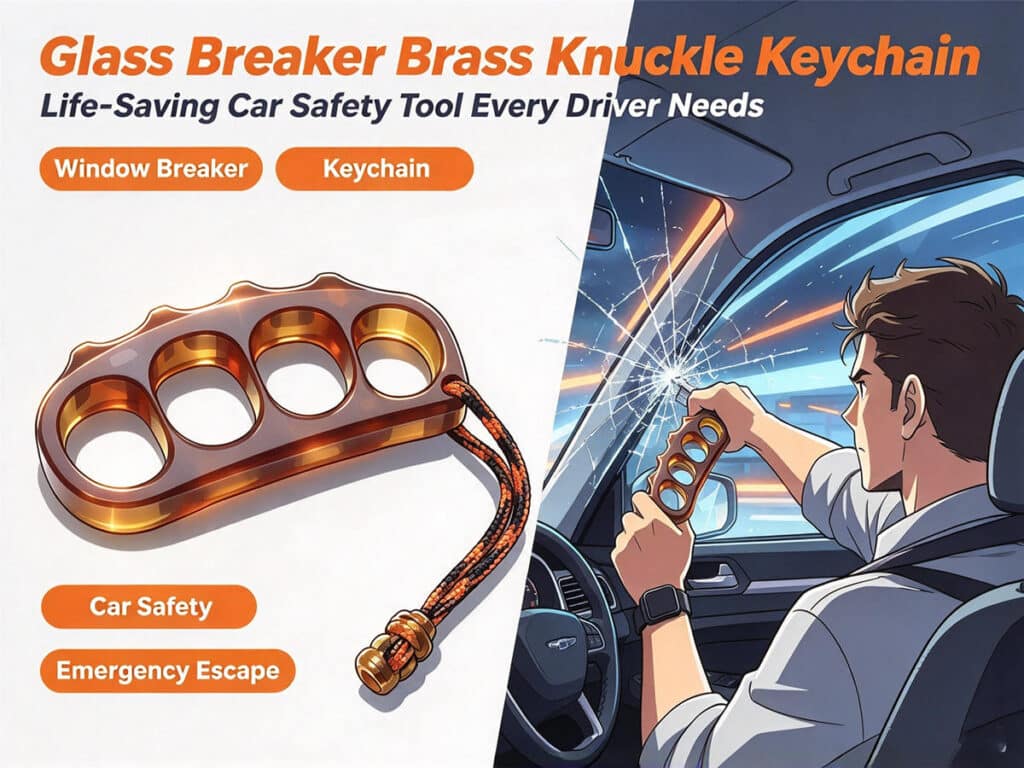
Glass Breaker Brass Knuckle Keychain: Life-Saving Car Safety Tool Every Driver Needs
Driving offers convenience and freedom, but it also comes with responsibilities that extend beyond following traffic laws and maintaining a vehicle. Unexpected accidents, vehicle fires, mechanical failures, and even sudden flooding can create dangerous situations in which drivers and passengers may need to leave their vehicles quickly. Although modern cars are equipped with numerous safety systems, there are circumstances in which electronic door locks, seatbelt mechanisms, or damaged doors may prevent occupants from escaping normally.
This is where a compact emergency escape accessory can become an important addition to a vehicle’s safety equipment. A Glass Breaker Brass Knuckle Keychain combines a distinctive ring-style design with an emergency window-breaking feature, offering drivers a compact accessory that can be kept close at hand. Depending on the model, similar products may also incorporate additional functions that make them useful as part of a broader everyday carry (EDC) setup.
While no small accessory can guarantee a successful escape in every emergency, having an appropriate, accessible, and properly designed vehicle escape tool can provide another option when conventional exits are unavailable. At brassknucklesmaster.com, we believe that understanding the intended functions, limitations, and responsible use of everyday accessories is essential when selecting equipment for personal preparedness.
Here are four important reasons why drivers may want to consider a dedicated glass-breaking emergency accessory and what they should understand before choosing one.
1. Emergency Window Breaking When Vehicle Doors Cannot Open
The primary purpose of a glass breaker is to provide an alternative exit when a vehicle door cannot be opened following an accident or another emergency. A serious collision may damage the vehicle’s structure, interfere with electronic locking systems, or leave the car in a position where normal doors are difficult to access.
In these circumstances, an accessible emergency window-breaking tool may help occupants create another potential exit, provided the vehicle uses compatible glass and the tool is designed and tested for that purpose.
Why a Dedicated Glass Breaker Matters
Automotive windows are not all manufactured from the same type of glass. Most conventional side windows use tempered glass, which is designed to break into numerous relatively small pieces when sufficiently damaged. Laminated glass, on the other hand, contains a plastic interlayer between glass layers, allowing it to remain together even after the glass has cracked.
This distinction is extremely important when selecting an emergency escape tool. A glass breaker designed for tempered automotive glass should not be assumed to work on laminated windows.
Research published by the American Automobile Association (AAA) in its Vehicle Escape Tool Evaluation found that four of six tested tools successfully broke tempered glass, while none successfully penetrated the laminated glass samples. This demonstrates why drivers should understand their vehicle’s window construction rather than assuming that any glass-breaking accessory will work in every situation.
Drivers can generally check the markings in the lower corner of each vehicle window to identify its glass type. If the information is unclear, contacting the vehicle manufacturer is a sensible way to confirm the specifications.
Understanding the Design of a Compact Glass Breaker
A dedicated emergency glass breaker typically uses a hardened impact tip designed to concentrate force on a small area of compatible tempered glass. Some models feature a fixed impact point, while others incorporate spring-loaded mechanisms that are designed to operate with less physical effort.
The design of a brass knuckle-style keychain may provide a compact ring-shaped exterior that is easy to attach to a keyring or carry with other everyday accessories. However, the decorative or ring-shaped appearance alone does not establish its emergency performance. Buyers should look for clearly documented impact-tip materials, product specifications, and actual testing information.
For drivers, the most important consideration is not how unusual an accessory looks but whether it is a properly designed and accessible emergency tool suitable for their vehicle.
2. Providing an Additional Escape Option During Vehicle Accidents
Vehicle accidents can create unpredictable conditions, particularly when a car rolls over, becomes trapped against another object, or sustains damage that prevents the doors from functioning normally.
Even relatively modern vehicles with advanced safety systems cannot eliminate every possible emergency scenario. Power failures, structural deformation, and damaged locking mechanisms may all complicate the process of leaving a vehicle.
A dedicated emergency escape accessory provides an additional preparedness option rather than relying entirely on electronic systems or conventional door handles.
Preparing for Unexpected Vehicle Situations
Consider a driver involved in a collision that leaves the vehicle resting on its side. The driver may experience difficulty reaching the door handle, and the vehicle’s electrical system may no longer operate as expected. If a normal exit is unavailable, a compatible emergency escape tool could become useful.
Similar concerns can arise when a vehicle becomes partially submerged in water. Water entering the cabin, changing vehicle orientation, and increasing pressure can make an already stressful situation more difficult.
Preparation should therefore begin long before an accident occurs. Drivers should understand which windows offer potential emergency exits, identify the location of their emergency equipment, and ensure that passengers know the basic escape plan.
A compact Brass Knuckle-style glass breaker may be one component of that preparation, but it should never be treated as a complete emergency solution or a substitute for appropriate vehicle safety equipment.
Accessibility Is More Important Than Appearance
One common mistake is purchasing emergency equipment and storing it somewhere that is difficult to reach. A window breaker placed inside a locked glove compartment or buried underneath luggage may be unavailable when occupants need it most.
A practical emergency tool should be secured in a location that remains accessible from the driver’s seat and, where appropriate, from other passenger positions. Its mounting arrangement should prevent it from becoming a loose object during normal driving or an accident.
Drivers should also consider passengers who may have limited mobility or difficulty reaching the driver’s equipment. Larger vehicles carrying families or multiple passengers may benefit from having appropriately selected emergency tools available in more than one accessible location.
The goal is straightforward: emergency equipment should be easy to locate, familiar to occupants, and ready for use without requiring unnecessary searching.
3. Supporting a More Complete Car Emergency Safety Setup
A glass breaker can be valuable, but vehicle preparedness involves more than a single accessory. Drivers should consider the different problems that may arise during an emergency and select equipment that addresses those needs without creating unnecessary clutter.
A well-planned vehicle emergency kit can include several compact items that serve complementary purposes, with each product selected according to the driver’s vehicle, travel habits, and typical driving conditions.
The Importance of Seatbelt Cutting Capability
A damaged or jammed seatbelt may become another obstacle after an accident. Although seatbelt systems are designed to protect occupants during collisions, damage or mechanical problems can occasionally make the release mechanism difficult to operate.
Some emergency escape tools incorporate a recessed seatbelt cutter that is designed specifically for cutting seatbelt webbing while reducing accidental contact with the blade.
When comparing products, drivers should check whether the cutter is actually included, whether its blade is properly protected, and whether the manufacturer provides clear instructions for its intended emergency use. A glass breaker without a seatbelt cutter may still have a useful purpose, but a combined design can address two different potential barriers to escape.
Other Useful Items for a Vehicle Emergency Kit
A compact vehicle emergency kit can include:
- Emergency glass breaker: A purpose-built tool intended for compatible tempered automotive windows.
- Seatbelt cutter: A guarded cutting feature designed for emergency seatbelt release when the buckle cannot be operated.
- LED flashlight: Useful for checking the vehicle, locating emergency equipment, and improving visibility after dark.
- First-aid kit: Helpful for dealing with minor injuries while waiting for professional assistance.
- Reflective warning equipment: Can help make a stopped vehicle and its occupants more visible to approaching traffic.
- Emergency phone charger: Provides an additional charging option when the vehicle’s electrical system is unavailable.
Not every driver needs an elaborate collection of equipment. A carefully selected group of reliable essentials is generally more practical than purchasing numerous accessories that may never be used.
For additional ideas, readers can explore the Best Car Safety Tools guide, which discusses important features to consider when preparing a vehicle for unexpected situations.
4. Combining Emergency Preparedness with Everyday Carry Convenience
One reason compact emergency accessories attract attention is that they can fit into an existing everyday carry arrangement. Drivers already carry vehicle keys, house keys, wallets, phones, and other personal essentials, making a well-designed keychain accessory a convenient option for keeping certain emergency equipment close.
A keychain multi tool offers a similar approach by combining several compact functions into one portable accessory. Depending on the design, it may include features such as a bottle opener, small screwdriver, or other lightweight utility functions.
However, emergency equipment should always be evaluated according to its primary purpose. Decorative features and additional functions should not take priority over reliable construction and suitability for the intended emergency application.
Why Portability Encourages Better Preparation
The usefulness of emergency equipment depends partly on whether people actually keep it accessible. Large tools may be effective but inconvenient to carry, while small accessories can fit more naturally into an existing routine.
A compact ring-style accessory may attach to a regular keychain, backpack, or suitable carrying point, allowing the owner to maintain a consistent storage location.
This can be particularly helpful for people who drive different vehicles throughout the week, travel regularly, or prefer carrying a small selection of essential accessories rather than maintaining a large equipment collection.
When evaluating portability, consider the accessory’s dimensions, overall weight, attachment strength, surface finish, and whether it can be secured without interfering with normal key use.
Complementary Everyday Carry Accessories
A practical EDC arrangement can include more than one type of accessory, provided each item serves a different purpose.
For example, a tactical pen can function as a conventional writing instrument for taking notes, signing documents, and recording important information. Certain specialized models also incorporate emergency features, although buyers should independently verify their specifications and intended applications.
A compact flashlight can provide illumination during nighttime vehicle inspections, while a dedicated emergency glass breaker can remain secured within reach in the passenger compartment.
The important principle is to avoid confusing everyday convenience with emergency performance. A regular keychain accessory should not automatically be considered an automotive escape tool simply because it contains a hard metal component.
For a broader look at selecting portable equipment, see the Keychain Multi Tool Guide and the Everyday Carry Tool Guide.
What Drivers Should Check Before Buying a Glass Breaker Brass Knuckle Keychain
Choosing an emergency escape accessory deserves more attention than selecting an ordinary decorative keychain because the product may be expected to perform an important function under stressful circumstances.
Before purchasing a glass breaker brass knuckle keychain, drivers should examine several details to determine whether the design is appropriate for their needs.
Material and Impact Tip Quality
The material used for the impact tip is an important specification. Some emergency glass breakers use hardened steel or tungsten carbide components, but material descriptions alone do not prove that a product will perform reliably.
Look for transparent specifications, manufacturing information, and credible testing results rather than relying on promotional descriptions or exaggerated performance claims.
Vehicle Compatibility
Check whether your vehicle uses tempered or laminated glass in its side windows. Different windows within the same vehicle may use different glass constructions, so checking only one window is not necessarily sufficient.
If your vehicle has laminated side windows, understand that conventional consumer glass breakers may not create an opening, even when they successfully crack the glass.
Secure Storage and Ease of Access
The product should be stored securely in a location that can be reached by the intended user. Avoid loose storage arrangements that could allow the accessory to become a projectile during a collision.
Also consider whether its ring construction, size, and attachment system are suitable for your vehicle’s interior and everyday carrying requirements.
Legal and Responsible Ownership
The term Brass Knuckle has specific legal implications in many jurisdictions, and products with this design may be subject to restrictions even when marketed as keychains or emergency accessories.
Laws can differ between states and local jurisdictions, covering possession, transportation, purchase, and public carry. Drivers should review applicable regulations before purchasing or carrying a brass knuckle-style product rather than assuming that its marketing description determines its legal classification.
Choose emergency equipment based on its legitimate safety function, and never use a glass-breaking accessory to threaten, intimidate, or injure another person.
Building Better Car Safety Habits for Every Journey
Having the right equipment is only one part of vehicle safety. Drivers should also develop habits that make emergencies easier to manage, because a compact accessory cannot replace preparation, vehicle maintenance, or informed decision-making.
Before beginning a long journey, check that your vehicle is in suitable operating condition, ensure that doors and windows function normally, and confirm that emergency equipment remains securely stored in its designated location.
It is also worth explaining basic emergency procedures to family members and regular passengers. Everyone should know how to release their seatbelt, identify an available exit, and locate emergency equipment without depending entirely on the driver.
For vehicle submersion emergencies, preparation is particularly important. AAA recommends understanding the vehicle’s window construction and planning an escape route in advance. If a vehicle enters water, occupants should prioritize escaping through an available opening as quickly as possible rather than assuming that a conventional glass breaker will work on every window.
Drivers should also remember that laminated glass may remain intact after impact, meaning that a different escape strategy could be necessary. Emergency glass breakers are intended as supplementary equipment, not a guarantee of escape.
A useful safety routine includes checking emergency equipment periodically, reviewing the manufacturer’s instructions, and replacing damaged or unreliable accessories. These small steps help ensure that equipment remains in a condition suitable for its intended purpose.
Ultimately, responsible preparation is about understanding potential risks and having realistic options available before something goes wrong.
A Glass Breaker Brass Knuckle Keychain may appeal to drivers looking for a compact and distinctive emergency accessory, but its actual value depends on product quality, compatibility with automotive glass, accessibility, and responsible ownership. By combining suitable emergency equipment with sound driving habits and an informed escape plan, drivers can take a more thoughtful approach to protecting themselves and their passengers on the road.
Explore brassknucklesmaster.com for more information about compact EDC accessories, keychain multi tools, tactical pens, and vehicle emergency equipment, and always prioritize verified specifications, practical functionality, and responsible product selection.